Through the Eyes of a Therapist Podcast
”Through the Eyes of a Therapist Podcast”, Host-Cristal M. Acosta, TX LPC-Supervisor, Board Certified Counselor, lets you in on what it’s like to be a mental health professional. Enjoy fun, educational, and candid discussions about therapy, mental health, and psychology. Humanizing therapists, destigmatizing mental health, and demystifying therapy.










Episodes
Apr 2, 2020
Apr 2, 2020
1hr 6 min
Hello, everyone! Today we discuss what it's like to be a therapist in the times of the Coronavirus epidemic. Myself and two other therapists located in El Paso, Texas talk about: what it's like to run a small business/private practice during a pandemic, how to prepare yourself as a therapist to see clients via tele-health during these unprecedented times, why you should see a therapist during this outbreak, struggles we see in our communities, and helpful tips/advice (other than washing your hands) for coping with this worldwide stress.
Must have information about today's guests:
Guillermo Castañeda (Memo) is a mental health counselor and hypnotherapist and the director of Counseling of El Paso. He completed his Masters in Education in Mental Health Counseling at The University of Texas at El Paso, and is certified in Hypnotherapy by the Hypnosis Motivational Institute. His clinical approach is eclectic as he believes that one size doesn’t fit all. His training and modalities range from Cognitive Behavioral Therapy, EMDR, and Hypnotherapy. He is passionate about helping others connect with their inner self and have strong and healthy relationships. He specializes in pain management and helps clients who are suffering from depression, emotional distress, or anxiety, as well as relational or environmental stress. It is his belief that as long as we are compassionate and loving to ourselves, we can also work effectively within ourselves, so his focus is on self-awareness.
Jazmine Silva, LPC-Intern Supervised by Gerardo Rosas, LPC-S, has both a counseling and a teaching heart. Prior to entering the counseling profession, she was a teacher at Ascarate Elementary for five years. Her profession in education and post graduate work inspired her at a personal level to pursue the field of counseling. Jazmine graduated with a Master of Science in Mental Health Counseling from UTEP’s Mental Health Program, CACREP Accredited, in May 2018. Currently, she works at Counseling of El Paso where she serves adults, children and their families. Jazmine is a Theraplay Foundational Theraplay Practioner and provides interventions based on Theraplay ® principles when working with children and their families. She is passionate about learning, growing and building better relationships.
Mentioned in the episode:
https://counselingofelpaso.com/
www.instagram.com/helping_hearts_changing_lives
Research by: Dr. Bruce Perry, Dr. Dan Siegel, Gary Landreth
Disclaimer: *Recommendations, discussion, and disclosures are for informational/entertainment purposes only. You should never substitute consultations/information from your own mental health/medical professionals with information from this podcast.*
Photo by cottonbro from Pexels

Nov 25, 2019
Nov 25, 2019
45 min
Hello again, everyone! Jen Reeves, LMFT-S, CST is back on the podcast giving us her expert opinion on the Netflix show "Sex Education". We discuss the characters from the show and talk about boundaries, teen development, and sex therapy in pop culture. SPOILERS AHEAD!
Takeaways from the episode:
Sex education should start at an early age
Portrayals of sex therapists in pop culture -- can be inaccurate/damaging
Sex therapists can work with individuals and couples about their relationships and sex lives
There are certain things that sex therapists (or any therapist) should not EVER DO
We may not be talking to our teens about sex adequately enough
Jen has a "Dear Abby" type sex column called "Getting Jiggy With Jen"...ask her a question here: jiggywithjen@gmail.com and follow here https://www.facebook.com/jiggywithjen/
Here is more info about Jen:
https://houstonrelationshiptherapy.com/more-about-jennifer/
Watch Sex Education on Netflix here: https://www.netflix.com/title/80197526
*Recommendations, discussion, and disclosures are for informational/entertainment purposes only. You should never substitute consultations/information from your own mental health/medical professionals with information from this podcast.*
*We do not own the rights to Netflix or Sex Education materials including the images used here. All discussions about the show are for entertainment purposes only. No copyright infringement intended.*

Oct 28, 2019
Oct 28, 2019
58 min
Hello again and welcome back to season three of Through the Eyes of a Therapist podcast! If you are a millennial, or if you were paying attention to life in the early 2000s, you may remember the iconic pop princess, Britney Spears! She has had an eventful life in the public eye…and what better way to dissect her resilience than with my returning guest on the show, Luis Cornejo, founder of Psychosocial Media, Marriage and Family therapist, and all-out Britney fan!
Takeaways from this episode:
Hear how Luis was inspired by Britney to pursue a career in mental health.
Precipitating events can trigger a cascade of issues.
Britney’s career may have impacted her mental health status.
Money and fame can’t prevent mental illness or emotional decline.
Privilege impacts recovery.
Child stars feel immense pressure to perform, and celebrities are trained to sell themselves as a product/brand.
Remember to get in touch with us by writing to hello@throughtheeyesofatherapist.org and enjoy this episode!
One last thank you to Luis for coming back on the show, it’s always a great pleasure to have him. Check out all the great content at https://www.Psychosocial.media (I happen to contribute written pieces to the blog).
Vote for the next TTEOAT Podcast episode by following me on Instagram (and to see my cute newborn and mommy-life posts) @throughtheeyesofatherapistpod
Until next time,
Cristal M.Acosta
*Recommendations, discussion, and disclosures are for informational/entertainment purposes only. You should never substitute consultations/information from your own mental health/medical professionals with information from this podcast.*
*We do not own the rights to Britney Spears materials including the images used here. All discussions about this individual are for entertainment purposes only. No copyright infringement intended.*
Sep 24, 2019
Sep 24, 2019
57 min
In this episode, two licensed professional counselors discuss the popular and controversial show "13 Reasons Why". Andrea Rios, LPC and Cristal Acosta, LPC-S, NCC dissect and dialogue about the implications the show can have on their clients. After a lunchroom discussion, the two therapists decided to record their opinions and perspectives for the podcast. LISTENER DISCRETION ADVISED. SPOILERS AHEAD.
Mentioned in the episode:
https://13reasonswhy.info/
UPENN Study on 13 Reasons Why
Find me on Instagram @throughtheeyesofatherapistpod or Facebook https://www.facebook.com/throughtheeyesofpodcast/
*Recommendations, discussion, and disclosures are for informational/entertainment purposes only. You should never substitute consultations/information from your own mental health/medical professionals with information from this podcast.*
*We do not own the rights to 13 Reasons Why. All discussions about the show are for entertainment purposes only. No copyright infringement intended.*

Aug 26, 2019
Aug 26, 2019
50 min
Welcome back to Through the Eyes of a Therapist Podcast! This season is all about pop-culture and the unique view of shows, books, and movies through a therapist's point of view!
In this episode we have returning guest/co-host, Elisa D. She is an LMSW who specializes in childhood trauma and works with victims of crime. This lens allows her to talk with me about Harry Potter's early childhood experiences. We cover complex trauma, resilience, early childhood development, and adverse experiences.
As mentioned in the episode: if you have had any bad experiences with Snape-like teachers, we want to hear about them! Please write to hello@throughtheeyesofatherapist.org
I will be going on maternity leave in a couple of weeks, but will still be publishing episodes at least once per month! Thank you for your patience with me and this child who is due in mid-September 2019!
See you for the next episode about 13 Reasons Why!
Find me on Instagram @throughtheeyesofatherapistpod or Facebook https://www.facebook.com/throughtheeyesofpodcast/
*Recommendations, discussion, and disclosures are for informational/entertainment purposes only. You should never substitute consultations/information from your own mental health/medical professionals with information from this podcast.*
Photo by Caio Resende from Pexels

Apr 29, 2019
Apr 29, 2019
49 min
If you want to be a psychologist but are considering a non-clinical route, this is a great episode to listen to. Social Psychology, just like clinical or counseling psychology, is only one of the many niches in the psychology world. This area of psych explores why people do what they do, why we think what we think--biases, perception, preferences, familiarity (to name a few phenomena). To be a social psychologist also probably means doing research, meaning you're also probably an experimental psychologist. My guest today is Clarissa Arms-Chavez, Ph.D, a tenured associate professor and social experimental psychologist at Auburn University. She and I discuss: social psych, working in academia, clinical psych, teaching at a university, tenure, impostor syndrome, and being a department chair. She also gives advice to undergraduates thinking about going to grad school!
Must have info about today's guest:
Clarissa J. Arms-Chavez, Ph.D. is an Associate Professor and Department Chair of the Psychology Department at Auburn University Montgomery. She earned her M.S. in Experimental Psychology and her Ph.D. in Social Cognitive Neuroscience from the University of Texas at El Paso. She has thirteen years of experience teaching undergraduate courses such as introduction to psychology, social psychology, social cognition, the psychology of prejudice & hate, and writing in psychology. She also has ten years of experience teaching advanced social psychology at both the Masters level (Auburn University at Montgomery) and the Doctorate level (Auburn University). In general, her research interests include the many various stigmas and prejudices involved within different social groups/categories (e.g., racial issues, colorism issues within the African-American community, sex and gender identity issues.

Apr 19, 2019
Apr 19, 2019
29 min
In this episode, I talk with my friend and colleague, Elisa. We discuss introverts, extroverts, ambiverts and some labels that [we] introverts do not like. We talk about pets, counselor life, and my extroverted partner. Are you an introvert? Listen for our GAME/QUIZ that gives characteristics of a true introvert (it'll make you say *same*)
Stay tuned to the very end for a special easter egg surprise (silliness ensues)!

Apr 19, 2019
Apr 19, 2019
49 min
Hello, Through the Eyes of a Therapist Podcast listeners! If you’ve gotten this far in my latest series on becoming a therapist, you’ve heard about Licensed Marriage and Family Therapists, Clinical Social Workers, and School Counselors. You know by now that to become a therapist, you need to get a master’s degree and to become fully licensed, you must complete a post-graduate internship. Most of these last at least 18 months post masters and you need to accumulate 3,000 hours of supervised practice.
Supervised practice means that you must contract someone who is a clinical supervisor to oversee and sign off on your 3,000 hours. Clinical supervisors make an investment in provisionally licensed practitioners by meeting with them on a weekly basis, going over treatment plans, evaluations, personal issues that may be affecting work with clients, and progress notes. This is, probably, the last time a clinician is being closely monitored in their career before becoming independently licensed.
To explain this further, my guest on the podcast today is Dr.Kate Walker. She is an expert on therapist development and growth. Her work includes training fully licensed therapists in becoming clinical supervisors. She has also written a book called “My Next Steps, Create a Counseling Career You’ll Love.” Find this book on amazon for less than 15 bucks! https://www.amazon.com/My-Next-Steps-Create-Counseling/dp/1937514722
INFLUENCE FUTURE THERAPISTS https://patron.podbean.com/therapisteyes
Apr 15, 2019
Apr 15, 2019
35 min
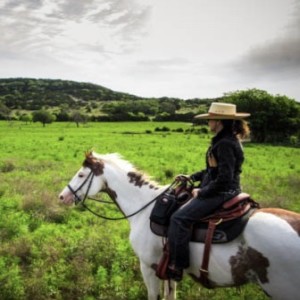
Equine therapy is a treatment modality that can be used for a wide array of client populations and issues in counseling. Equines are horses, and if I didn't do an episode about equines, I wouldn't be able to call myself a true Texan! I am so excited to release this interview because I learned so much about the healing power of horses in counseling/therapy. My guest, Janet Nicholas, gives us details on how to become an equine therapist (not to be confused with hippotherapy) and why horses are so healing in this capacity. I hope you enjoy this content as much as I do!
Must have info about my guest:
Janet Nicholas is a Licensed Professional Counselor and a Licensed Chemical Dependency Counselor from South Texas. She has been working in the mental health field for 20 years. Her personal and professional experiences have led her to engage in her current passion of equine therapy. She has her own practice where she sees clients in a traditional office, but also does some of her favorite work out in her "grassy office" with her equine therapy associates (her horses). She went to the University of Houston, St.Edward's University, and then received her Master's Degree in Clinical Psychology from Sam Houston State University. Visit her websites: www.trails-less-traveled.com or www.janetnicholas.com
Mentioned in the episode:
Equine therapy information...
EAGALA: https://www.eagala.org/
E3A: https://www.facebook.com/E3Assoc
PATH: https://www.pathintl.org/
"Adventures in Awareness; Learning With the Help of Horses" by Barbara Rector

Apr 1, 2019
Apr 1, 2019
49 min
Contemplative therapy has foundations in clinical psychology and Buddhist psychology. This approach may be helpful if you: have a busy life, have a life...if you live, breathe....lol. It can be beneficial for ANYONE. In this episode, my guest and I discuss the difference between conventional therapy and contemplative therapy. We also talk about anxiety, which is, according to Catalina, one of the most common problems in her practice. We also talk about how contemplative therapy can help a person develop an awareness of their own emotions. She also explains how to start your own daily contemplative practice.
Must have information about my guest:
Catalina is a Contemplative Therapist and Life Coach with extensive studies in Tibetan Buddhism in India.
She’s developed the Silence Therapy Technique for Self-Healing, offering her clients the tools to find home within themselves through self-observation, stillness and the ability to tune in to the voice of our inner wisdom.
She enjoys Silence, traveling without schedules, daily rituals and having a cup of ginger chai while watching people pass by.
You can find more information on how to incorporate the practice of Silence in your days, on her website: [ https://inthenameofsilence.co] and Instagram: [@inthenameofsilence]
For questions, comments, new episode ideas......write to me! www.instagram.com/throughtheeyesofatherapist
REMEMBER TO FOLLOW TTEOAT PODCAST ON INSTAGRAM AND FACEBOOK.
*Recommendations, discussion, and disclosures are for informational/entertainment purposes only. You should never substitute consultations/information from your own mental health/medical professionals with information from this podcast.*